import { Pipeline } from '@gargantua/core';
import { SchemaRegistry } from './registry';

const pipeline = new Pipeline({
  source: 'enterprise-lake',
  transforms: [
    normalize({ encoding: 'utf-8' }),
    deduplicate({ key: 'entity_id' }),
    enrich({ provider: 'knowledge-graph' }),
  ],
});

async function ingest(stream) {
  const schema = await SchemaRegistry
    .resolve(stream.metadata);
  return pipeline.run(stream, { schema });
}

export const DataMastery = {
  ontology: buildOntology(sources),
  validate: (record) => schema.check(record),
  pipeline: pipeline.connect(),
};

from transformers import AutoModel
from gargantua.cognitive import Agent

class CognitiveEngine:
    def __init__(self, config):
        self.model = AutoModel.from_pretrained(
            config.base_model,
            quantization='int8',
        )
        self.agent = Agent(
            reasoning='chain-of-thought',
            tools=config.tool_registry,
        )

    async def inference(self, prompt):
        context = await self.agent.plan(prompt)
        embeddings = self.model.encode(context)
        return self.agent.execute(
            embeddings,
            temperature=0.7,
            max_tokens=4096,
        )

terraform {
  required_providers {
    gargantua = {
      source  = "gargantua/ecosystem"
      version = "~> 3.0"
    }
  }
}

resource "ecosystem_platform" "main" {
  name     = "enterprise-mesh"
  region   = var.deployment_region
  scaling  = {
    min_nodes = 3
    max_nodes = 120
    strategy  = "predictive"
  }

  engagement_layer {
    analytics = true
    realtime  = true
    cdn       = "edge-optimized"
  }
}

const nexus = await connect({
  endpoint: process.env.NEXUS_URL,
  auth: { type: 'bearer', token },
});

await nexus.stream('telemetry', {
  window: '5m',
  aggregate: 'p99',
  filter: (e) => e.latency > 200,
});

model = Sequential([
  layers.Dense(512, activation='relu'),
  layers.Dropout(0.3),
  layers.Dense(256, activation='relu'),
  layers.Dense(num_classes, activation='softmax'),
])

model.compile(
  optimizer=Adam(lr=3e-4),
  loss='categorical_crossentropy',
  metrics=['accuracy', 'f1_score'],
)
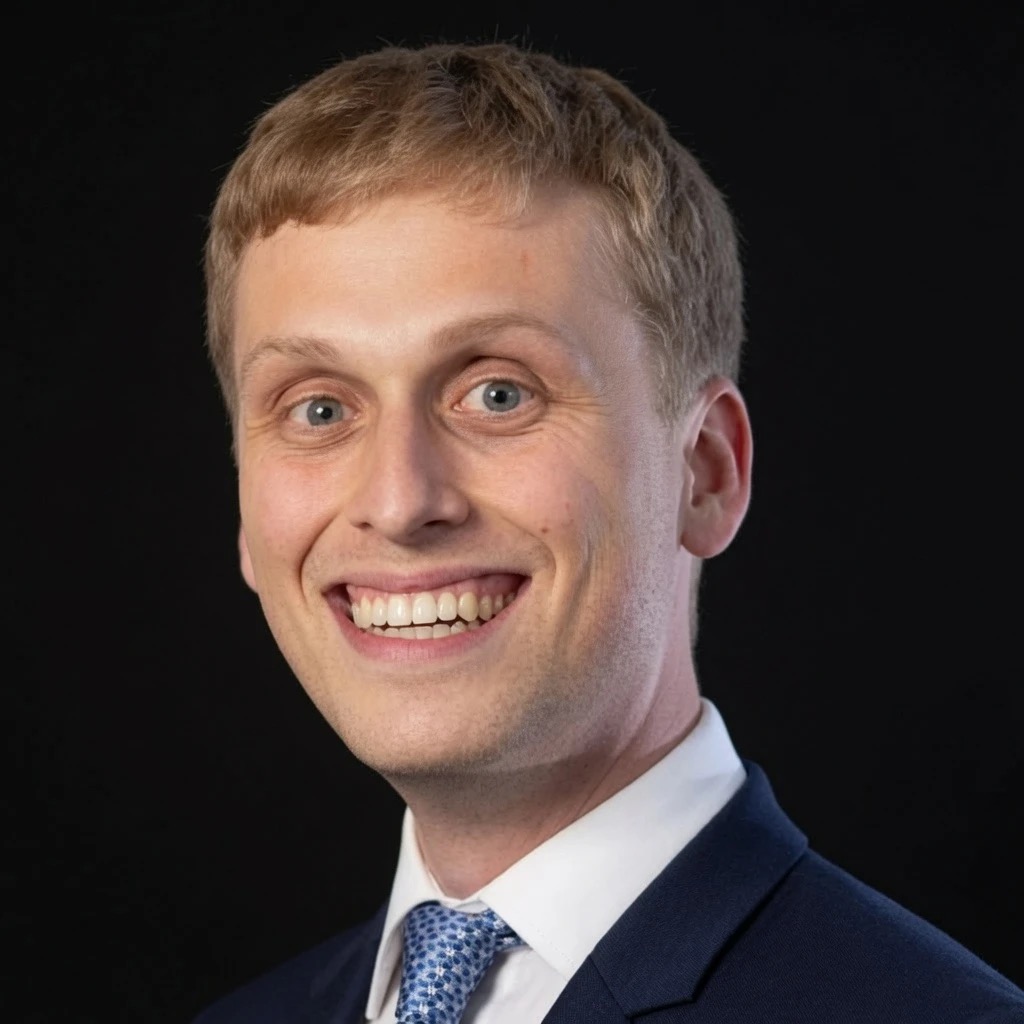
Marcus Schwarting

Marcus Schwarting, PhD

ML Research Scientist

Marcus Schwarting (PhD, Computer Science, University of Chicago) is a research engineer at Gargantua, where his technical work focuses on machine learning evaluation, benchmark design, data structures, and algorithmic methods for building and analyzing intelligent systems.

He is also the senior editor of AI and Faith and an AI researcher at SUNY Buffalo, where his research applies machine learning and artificial intelligence to problems in chemistry and materials science.

His technical work has appeared in venues including Nature Scientific Data, NeurIPS, and the Journal of Chemical Physics. His work on AI ethics has been published in Christianity Today, the Journal of Theology and Science, and the Journal of Lutheran Ethics.