import { Pipeline } from '@gargantua/core';
import { SchemaRegistry } from './registry';

const pipeline = new Pipeline({
  source: 'enterprise-lake',
  transforms: [
    normalize({ encoding: 'utf-8' }),
    deduplicate({ key: 'entity_id' }),
    enrich({ provider: 'knowledge-graph' }),
  ],
});

async function ingest(stream) {
  const schema = await SchemaRegistry
    .resolve(stream.metadata);
  return pipeline.run(stream, { schema });
}

export const DataMastery = {
  ontology: buildOntology(sources),
  validate: (record) => schema.check(record),
  pipeline: pipeline.connect(),
};

from transformers import AutoModel
from gargantua.cognitive import Agent

class CognitiveEngine:
    def __init__(self, config):
        self.model = AutoModel.from_pretrained(
            config.base_model,
            quantization='int8',
        )
        self.agent = Agent(
            reasoning='chain-of-thought',
            tools=config.tool_registry,
        )

    async def inference(self, prompt):
        context = await self.agent.plan(prompt)
        embeddings = self.model.encode(context)
        return self.agent.execute(
            embeddings,
            temperature=0.7,
            max_tokens=4096,
        )

terraform {
  required_providers {
    gargantua = {
      source  = "gargantua/ecosystem"
      version = "~> 3.0"
    }
  }
}

resource "ecosystem_platform" "main" {
  name     = "enterprise-mesh"
  region   = var.deployment_region
  scaling  = {
    min_nodes = 3
    max_nodes = 120
    strategy  = "predictive"
  }

  engagement_layer {
    analytics = true
    realtime  = true
    cdn       = "edge-optimized"
  }
}

const nexus = await connect({
  endpoint: process.env.NEXUS_URL,
  auth: { type: 'bearer', token },
});

await nexus.stream('telemetry', {
  window: '5m',
  aggregate: 'p99',
  filter: (e) => e.latency > 200,
});

model = Sequential([
  layers.Dense(512, activation='relu'),
  layers.Dropout(0.3),
  layers.Dense(256, activation='relu'),
  layers.Dense(num_classes, activation='softmax'),
])

model.compile(
  optimizer=Adam(lr=3e-4),
  loss='categorical_crossentropy',
  metrics=['accuracy', 'f1_score'],
)
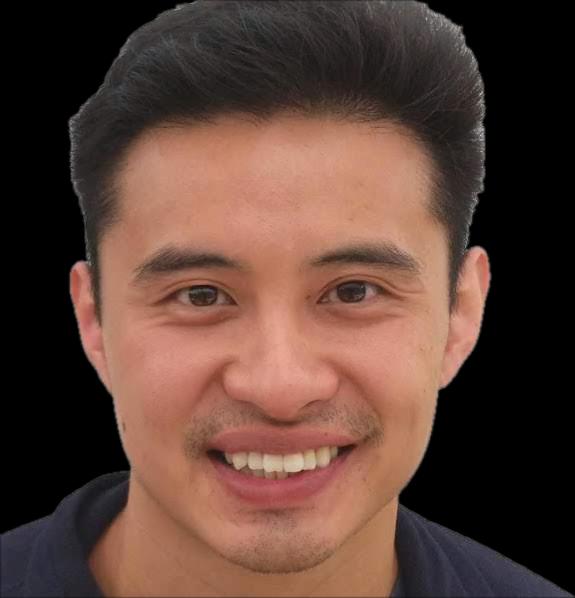
Richard Zhang

Richard Zhang, PhD

AI Research Scientist

Dr Richard Zhang is a distinguished research scientist at Google DeepMind and a principal technical consultant for Gargantua Group, where he leads the development of cutting edge machine learning optimization systems.

At Gargantua Group, he consults on enterprise‑scale AI systems with a focus on hyperparameter tuning and neural architecture search, bringing theoretical advances to production environments.

In his role at DeepMind, he serves on the Vizier team as a co‑creator of OSS Vizier, specializing in Bayesian calibration and theoretical machine learning.

Richard earned his Ph.D. in Applied Mathematics and Computer Science from UC Berkeley, after completing his undergraduate studies at Princeton University. His research has been featured at prestigious venues.